When I open up Vir Sanghvi’s blog on the Hindustan
Times, I tend to personally have a denial to read it from the alleged
involvement of Vir in the 2G Spectrum. However, as I move past the premature
block, I remember, he used to be my dad’s favourite though I again feel that
his access to luxurious food and couture gifts was too flamboyant. His articles
have a lot of I’s – “I have heard”, “I think” or “I don’t”. Some statements
lose support as they tend to be based on rumors which he quotes. So certain
sections tend to look like a report of rumours. For example, “ I have heard Congress leaders say that voter
fatigue has set in and that the people of Gujarat are getting fed up of Modi. I
have also heard it said that Keshubhai will take away Patel votes and will act
as a spoiler in many constituencies.” The article is infused and spaced with
personal perspectives and sentiments. It gives the idea of a conversation with
a friend rather than an editorial to the public.Check out the blog here
Wednesday, 17 October 2012

Wednesday, 4 July 2012
Dai Blog ai Social Network - Review
For those out there who wish to experiment with blogs or wonder about the cognitive processes behind the wildfire of social networks, many authors come together with their articles of analysis and advice in the book ‘Dai blog ai social network | Arti della connessione nel virtuale’ by Maria Maddalena Mapelli, a blogger on the same subject herself, and Umberto Margiotta, a philosophy professor.

The collaboration between such fields is evident in technical examples utilizing graphs and statistics and metaphorical comparisons of Facebook to fractals. The book has analytical, funny, analogical and mathematical explanations and articles in its chapters which bring out the depths of the subject without boredom creeping in. On a personal note, the quality of the paper is similar in smell and feel to that of a mystery novel. Happy reading!
The collaboration between such fields is evident in technical examples utilizing graphs and statistics and metaphorical comparisons of Facebook to fractals. The book has analytical, funny, analogical and mathematical explanations and articles in its chapters which bring out the depths of the subject without boredom creeping in. On a personal note, the quality of the paper is similar in smell and feel to that of a mystery novel. Happy reading!
Wednesday, 16 May 2012
Prada’s Minimal Baroque or Baroque’s Minimalism?
Prada’s minimal baroque raised a lot of
applause and criticism this season. Were the bananas and the monkeys to
represent intellectuals or were ironic? Do Carmen and Josephine speak
minimalism in terms or quantity or style?

Other than Prada, the rest seemed to stick
to either one of the words for the spring 2011 shows, minimal OR baroque in the
sense of excess. As one might have
noticed, baroque has just too many connotations and Miuccia stuck to the many
of them from excessiveness to the sculptures.
From
the church of Quirinale to the Trevi Fountains the style is in-bred in Rome in
its cultural history. Also there are other important references to the baroque
style such as the Portuguese painter Josefa de Óbidos’s paintings and the
Augustusburg palace near Cologne which seem to widen the ancient phenomenon to
a European scope of view. Speaking of
Minimalism one not just remembers the black square of Malevich but also
Composition No. 10 of Piet Mondrian (inferenceà
Stripes). And there comes the minimal
reference and not the process.

And
so there was the collection, a revolution of the baroque with a tribute to
Miranda and Baker in the Prada girl of the season, fun in culture. London’s
Christmas windows of Prada seemingly Baroque framed themselves. Prada played
with the Baroque angel sculptures using monkeys from the ’Barrel of Monkeys’
game. Prada’s change from minimalism to minimal baroque has elevated the
brand’s status to new heights.


The
baroque excessiveness in its modernity fused with the Samba and Charleston were
in the tango music and the pops of colors. The 20s sensuality blended in with
the slick hair. The idea was juggled in Prada’s mind and thereby manifested in
the collection.
Like it or not, the show remains a huge
incomparable topic for many. And Prada’s elevation has been beyond successful.
Make fashion fashionable with these elegant and supportive walk-makers
Wedge, defined as any shape that is
triangular in section, seemingly has bloomed itself into a new trend in the
world of high heel fashion. Not necessarily high heeled, as the heels can vary
from low till as much as one wants. When Charlize Theron unleashed her weapons
in ‘Æon Flux’ from her wedge boots, one could imagine how useful a pocket in it
would be? Either way it showed how slender and supportive it could be for a
woman of adventure though stilettos deceptively are represented so too.
Obviously a wedge would be the more ideal option if one were to run a
high-heeled marathon.
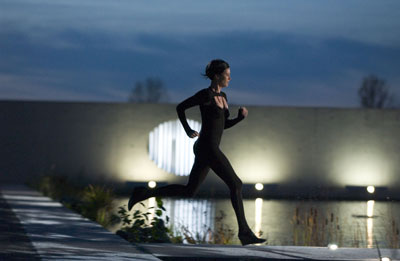
This Spring/Summer 2011 Christian
Louboutin, a shoe lover’s top pick, designed the wedges in such fascinating
platforms for Mary Katrantzou one would have wanted to snatch them off
backstage.

In the famed success of the Minimal Baroque
collection, Prada used sneaker style wedges, raced on the soles à Comfort.

The wedge was invented in the 1930s by
Salvatore Ferragamo to ease the pain of carrying off High heels, but the rise
in fame of the stilettos pushed aside the wedges till finally the time has come
in the new millennium. So much so Disney has helped put its fame on kids by Belle
wedges, for a little Beauty from the ‘Beauty and the Beast’ wanna-be, already
sold-out. Simply gorgeous!

Other pros of wearing a wedge - they make
ankles thinner, they are intensely cosmopolitan, and they can add height with
much lesser pain and more speed.


From Donna Karan’s Textured and Espadrille
styles to Nine West’s Gladiator style, wedges are available in every
style and colour.
The trend is rising and seemingly would
stay for quite some time to come, as comfort with elegance is the ultimate
luxury a woman seeks.
A Memoir from Rome
The Augustean Altar of Peace (Ara Pacis), a shrine for the return of Augustus from Gaul and Hispania, made of pure white marble now enclosed in modern interiors, renders peace as one enters. White, a symbol of death in some cultures, and peace in some others, surrounds the brain into a clean slate before we ride back in time through the retro-hued passageway below, with pictures from around Rome – Trinità dei Monti to Cinecittà. Yes, and there were moccasins in between. Not the soft soled sheepskin types from New Zealand, but the ones we now call Vintage - well polished leather and with a buckle. Roman Holiday, a beautiful love story of two never-to-be-united lovers is also a fun reminder of the Vespa and the jaunty Audrey Hepburn. Pictured around Rome, Audrey could exhibit a lifestyle of the metropolis. Her signature style basket bag, huge sunglasses and The LBD, simple and sleek from Breakfast at Tiffany’s, an American preppy yet French gamine use of loafers in Funny Face, an attitudinal headscarf usage and the casual look were all revolutionary yet chaperoned trends at the time. Pieces of style they were, appreciated by all. Alongside thecae with some of her wardrobe was the wonderful timeline she spent in Rome. Her accessories and the moccasins seemingly of a size 39 were also encased. A sleek gown from Valentino with hippy and boudoir styles seen on the sleeves during her family life with Andrea Dotti in the 70s was swiftly captured by the Roman Paparazzi. In the photos, Audrey always gently greets the camera with grace. Going back to the mini skirt period of the 60s, Audrey pairs them daintily with white stockings and the legendary XL sunglasses. Her elegance was never excess which made her style ever-appealing. Her first stays in Rome in the 50s are portrayed with her use of a lot of cocktail dresses, the Sabrina neckline and the LBD just below the knee on her slender figure. From the 50s through the early 70s she has had a flourishing career after which she elegantly grasps on to the role of a mother. In 1988, Audrey travelled to Somalia and described the situation of insurgency there as ‘hell’. The travel moved her soul so much so that she continued to work with UNICEF and the museum now donates a portion of the exhibit’s income to the same. Audrey personally didn’t sense much of a self-confidence regarding her looks which she believed were amazingly photographed and was the work of the cameras in the movies. Her script from Roman Holiday, with her hand-written notes is preserved at the core of the exhibit hall and so are the Vespa she drove in the same movie at the back and her original British passport, all of which reminisce the lively finesse of Audrey. On the wall facing the Vespa, is projected her personal family videos (never shown to the public before). The second wedding of her life interestingly portrays her in the video with a short pink coat dress also in display. Seemingly mature and simple, it adds to her girly style at the same time. One continues to bear in mind, the image of her childish smile, and her seagull wing-shaped eyebrows concordant with her jaw line while taking one’s leave through the passageway back to the white, clean-cut exteriors of Ara Pacis and the inescapable Souvenir gift shop.
The Tender Candour of The Hearts
Bright colours and recurring hearts - Manish Arora’s logo and designs connect with summery warmth and dreamy eyes, eyes of those who beyond doubt feel gratified. This is augmented by his name, Manish, which in the Sanskrit language means “God of the Mind”.
Federico Rocca of style.it wrote in the book ‘Contemporary Indian Fashion’, “Manish Arora…is popular to the point of excess”.
When the corporate world is taking over not just fashion but every other untaken sphere, there are very few unfeigned humane tendencies that seem to be articulated. To see with a sweet essence in itself has become an art in the place of the natural spontaneity of innocence.
The new marketing trends of making a love mark, analysing emotional reactions and planning a perfect advertising stimulus accordingly, has mechanised the way things have worked for centuries. The ethic realisation coming up now in itself has been utilised as a tool by many to purely construct a brand image. Hardly few pursue some moralities because they want to, and not as a marketing strategy. As Manish put it, “I do it because I want to do it” - incorporating the heart not just in visual forms but with its inner profound meaning, with true esteem and insight.
“Money is important”, Manish said in an interview to V&A magazine. Indubitably, it is very factual. But that which makes him like chalk and cheese in comparison with the omnipresent corporative milieu are not just his artistic creations and his unique identity but also the happiness that lights up the hearts of the specialist weavers who work for him which is different from the scenario seen in other parts of the world.
Manish has his own factory, “Three Clothing Private Limited” in a city called Noida, around 20 km from the capital of India, where he employs 300 people. From the fabric swatches to the final finishes, all garment creations of Manish are executed here. He has done the SWOT analysis of his mother land so efficiently that he mentioned in a Fashion talk on Indian fashion for Alta Roma Alta Moda “We are very good at surface ornamentations, but when it comes to shapes, we are awful.”
The traditional textiles and surface ornamentation in India have a long history and a huge variety, and Manish is still emotionally involved with his roots and with his steadfast workers. “I have workers who have been with me since the day I started; over the years they have honed their skills to suit my sensibilities.”
The textile talents of India lie in incomparable elements in fabrication and elaborate workmanship with a cut above excellence. But the life of an unemployed average weaver or traditional embroidery artisan in India would be in a small house, even a palm leaf/mud hut possibly, sweating on his creativity and on tenterhooks to sell it for some money, to keep alive that very art he inherited from his forefathers, taught throughout his ancestral roots, just to feed his rumbling stomach or to at least earn a meagre amount for his starving kids with fragile bodies.
The art is slowly dying out with people sticking to easy-to-use technologies and opting for uncomplicatedly made plain tees rather than hard, hand-worked Indian wear. A person off the streets of New Delhi would know the new style of trousers in fashion far better than the types of embroidery that have survived through ages in his region.
Here is where Manish’s heart comes in among the minority of those who in point of fact want to prop up time-honoured talents. With an unwavering mind he picks ethnic weavers to work on his exceptional designs, incorporating the rich adornment in not only his western “Fish Fry” line, but also his traditional line, “Indian”. The reason, he declared, “I feel happy that I am able to give them the opportunity to do something different, at the same time I also feel incredibly lucky to have access to such a talented workforce.”
The artisans when working for him not only feel content that they get paid, but also feel the art which they have never let down has at last been reawakened. In particular, the embroiderers working for Manish hail mostly from West Bengal, Uttar Pradesh and the economically not-so-well state of Bihar. These regions are renowned for the folk embroideries of Kantha, Kashida and Chikankari, all seen as contemporary as well as futuristic fusions in his motifs.
For a traditional weaver who has led such a habitual life in the sense of producing quite the same kind of designs for a long time, now to work for Manish with such creative designs, to make new interpretations of the redundant patterns s/he has been making is a fascinating experience, to know that what s/he does on fabrics is not only feeding the family but is also been witnessed on international runways worldwide.
Scientific innovation exists in an indispensable position and Manish undeniably utilises modern technology in all his collections. As a graduate of National Institute of Fashion Technology, New Delhi, to make the most of up-to-the-minute textile machinery is instinctive for him. At the same time however, he has assured, “I will never replace the work these craftsmen do, as it is special and will always feature in my designs.”
The pride they feel when they see the fascinating appearance of the final products, - that is where Manish’s heart is, not just in apparent logo or designs, but in those artisans who are delighted that their skills have been undoubtedly accredited now. That is where the “Colours of India” come from – not Bollywood, but from people who gain immense satisfaction from their jobs.
And that is what makes Manish Arora and his company emblematic, his heart of empathy and the artisans hearts that are steadfast in dedication to their work; not a frequent phenomenon in the fashion nuclei of the planet.
Stylish and Powerful Snowclone of Fashion
1926, a year which shadowed and overpowered the world of fashion, when Chanel introduced the LBD, famed to this day in various manifestations... ‘X is the new Black’ so they say. But in fact, what has ever beaten the empowerment of Black? Scientifically it is defined as the hueless, achromatic color, but to the eye it remains eternally mystical and noble on a silhouette, always making it sleek, or glam, or cute, or dangerous, any way one wants to use it. And that would be because the huelessness is what allows us to mould the color into various avatars, equivalent to the innumerous possibilities to be written upon a blank sheet of paper.
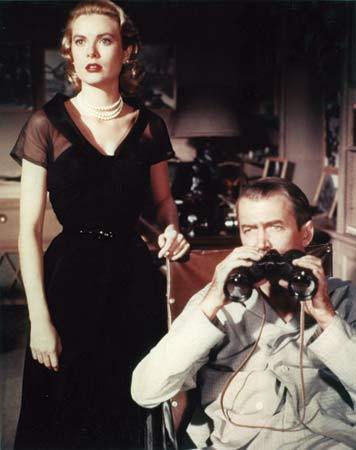
Hollywood enforced the image of the LBD in the 50s and 60s. In 1954, in the classic Hitchcock thriller, Rear Window, Grace Kelly wore a famed black dress.
_14.jpg)
(Left) Grace Kelly in ‘Rear Window’, 1954; (Right) Audrey Hepburn from ‘Breakfast at Tiffany’s’, 1961
In 1961, Audrey Hepburn carried off the famed LBD from Givenchy in Breakfast at Tiffany’s, which once again reinforced the fame of the dress immensely, as much as to be auctioned for charity at £467,200 recently in 2006. The attire of black could aid numerous children in India.

Rita Hayworth in ‘Gilda’, 1946
If Rita Hayworth could become the ultimate femme fatale image, it was solely due to the seductive black satin dress one-glove striptease from Gilda.
Well, and who said it is only in the form of a little dress that black should allure us? Dolce and Gabbana introduced the Black corset look, famed on Madonna with a cross necklace.


YSL’s Fall 2010 RTW show’s favourite piece was the Black Silk Crepe Jumpsuit, with Black Gloves. Diane Pernet intensifies her mystical style with her all-in-black clothing, not to mention the black base of ASVOF.
And not forgetting the initiator of the black dress revolution, Karl Lagerfeld for Chanel designed a Marienbad inspired collection for Spring 2011 RTW, with a ninja twist though. The last section of the show totally made one nostalgic of Delphine Seyrig’s clothes designed by Coco Chanel herself. Salute to the lady in black!

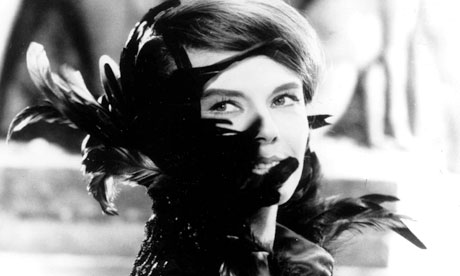
(Left) Chanel Spring 2011 RTW; (Right) Delphine Seyrig in ‘Last Year in Marienbad’, 1961
Subscribe to:
Posts (Atom)